

 Global Service
Introduction
7:00 AM. The alarm rings. You reach for your phone, put on your earphones, head out the door, get in the car, and turn on the navigation.
Within these everyday actions lie two types of precision manufacturing: precision components built into products, and test probes that "examine" chips to ensure they pass. Though tiny in size, they determine how well your devices perform and how long they last.
On September 9, the 27th China International Optoelectronic Exposition (CIOE) opened in Shenzhen. We’d like to take this opportunity to show you how these applications and precision manufacturing integrate into our daily lives.
Day 1: District Mayor Visits Our Booth
On the opening day (September 9), the Shenzhen World Exhibition & Convention Center (Bao'an) was bustling with crowds. Our UIGreen booth was continuously filled with visitors and clients seeking information and consultations.
On this opening day, Mr. Xu Jiming, Deputy Secretary of the Party Working Committee of Suzhou High-tech Zone and Mayor of Huqiu District People's Government, along with his delegation, also visited the UIGreen booth for inspection and guidance.
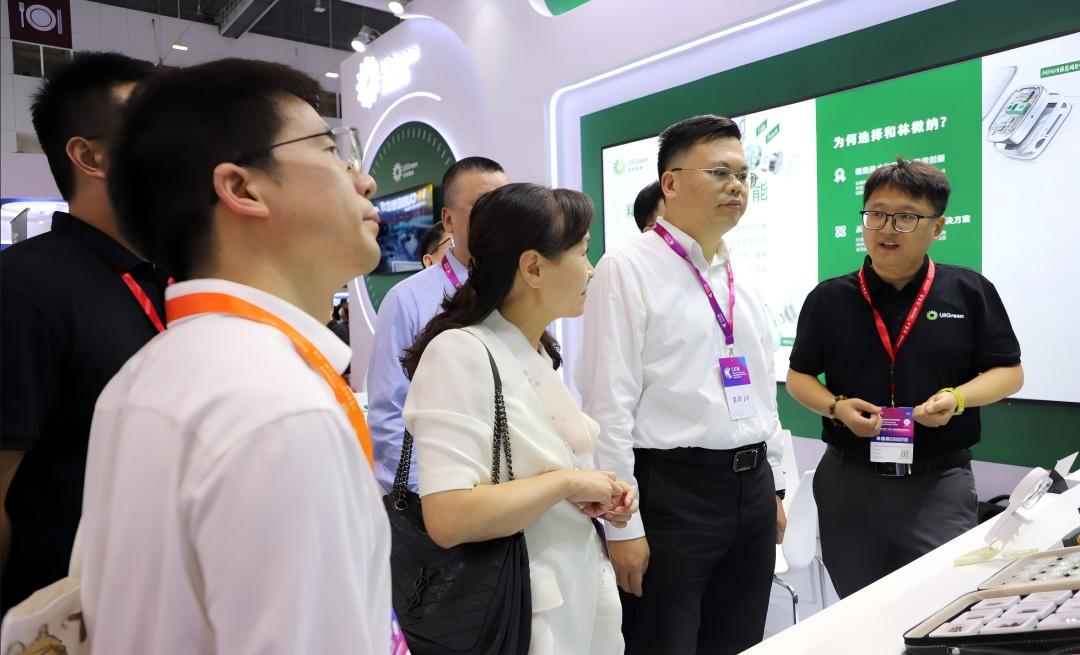
(Image caption: Mayor Xu and his delegation visiting the UIGreen booth)
At the booth, Mayor Xu and his delegation carefully observed our displays of precision shielding covers, precision optical structural components, spring probes, and test sockets. They gained a detailed understanding of UIGreen's technologies and applications in MEMS acoustics, precision optical components, and semiconductor chip testing. They affirmed UIGreen's long-term dedication to micro-precision manufacturing and its micron-level processes that support the upstream and downstream industries. They also encouraged the company to continue independent innovation and to solidify its expertise in precision manufacturing.
The Moment You Put on Earphones: Precision in Acoustics
Inside a TWS (True Wireless Stereo) earphone, there is a MEMS acoustic module responsible for capturing and delivering sound.
Within this module lies an inconspicuous yet critical component—the precision shielding cover. It blocks electromagnetic interference (EMI) to keep the sound clean.
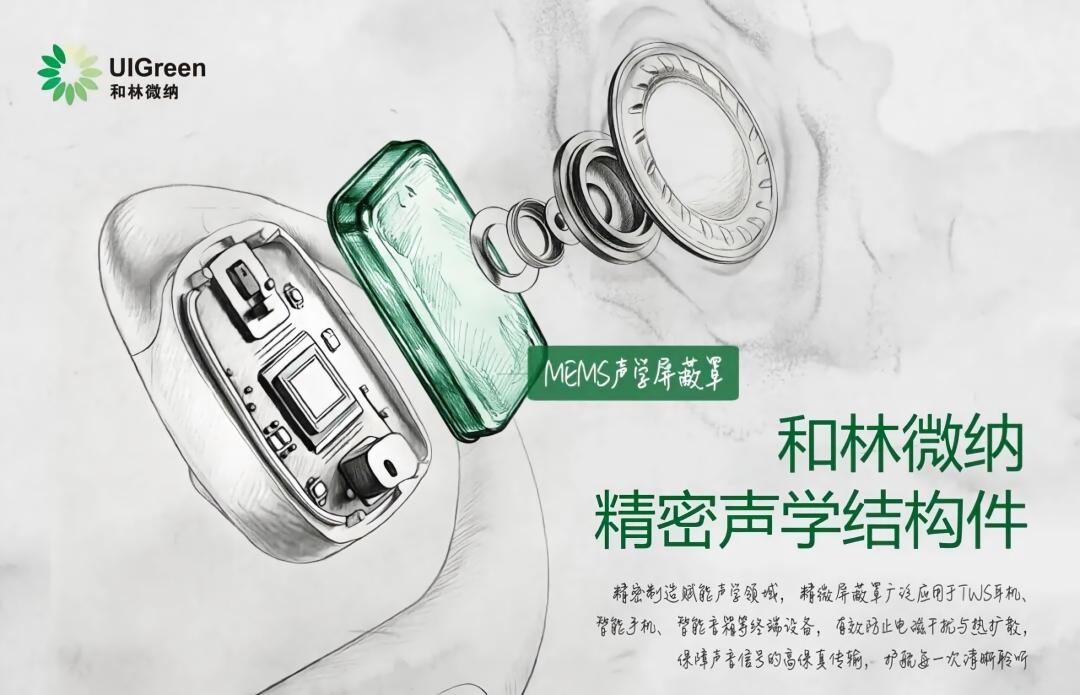
(Image caption: Exploded view of precision acoustic structural components)
UIGreen's shielding covers achieve a shielding effectiveness of 73–75dB, outperforming the market average of approximately 70dB. The machining precision can be controlled within 12 microns (Note: this metric varies by specific product, and actual values may fluctuate). This is the precision manufacturing "built into products."
At the booth, many visitors stopped in front of the acoustic exhibits, picked up the electron microscopes to experience the craftsmanship and materials of these precision components, and asked our staff about the technical details of the shielding covers.
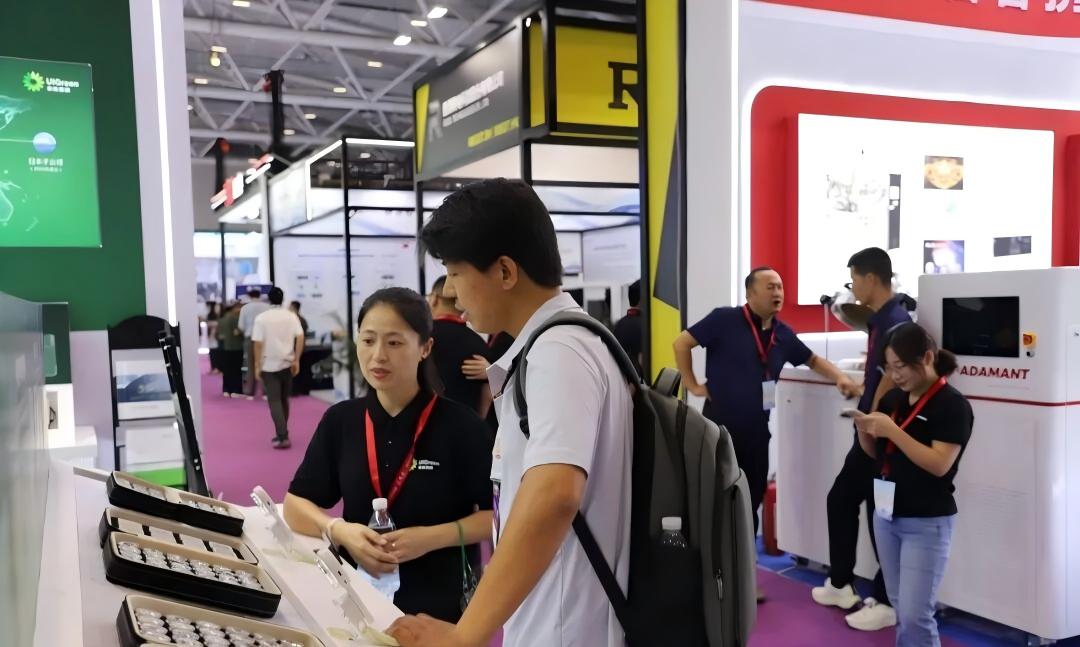
(Image caption: Visitors inquiring about products on-site)
UIGreen remains a global leader in the field of micro/nano manufacturing components for MEMS acoustic modules. Globally, one out of every eight MEMS acoustic module micro/nano components comes from UIGreen.
Taking a Photo with Your Phone: Precision in Optics
The ability of a smartphone camera to auto-focus and capture clear images relies on a complete set of precision optical modules—lens barrels, brackets, bases, voice coil motor (VCM) housings, and more.
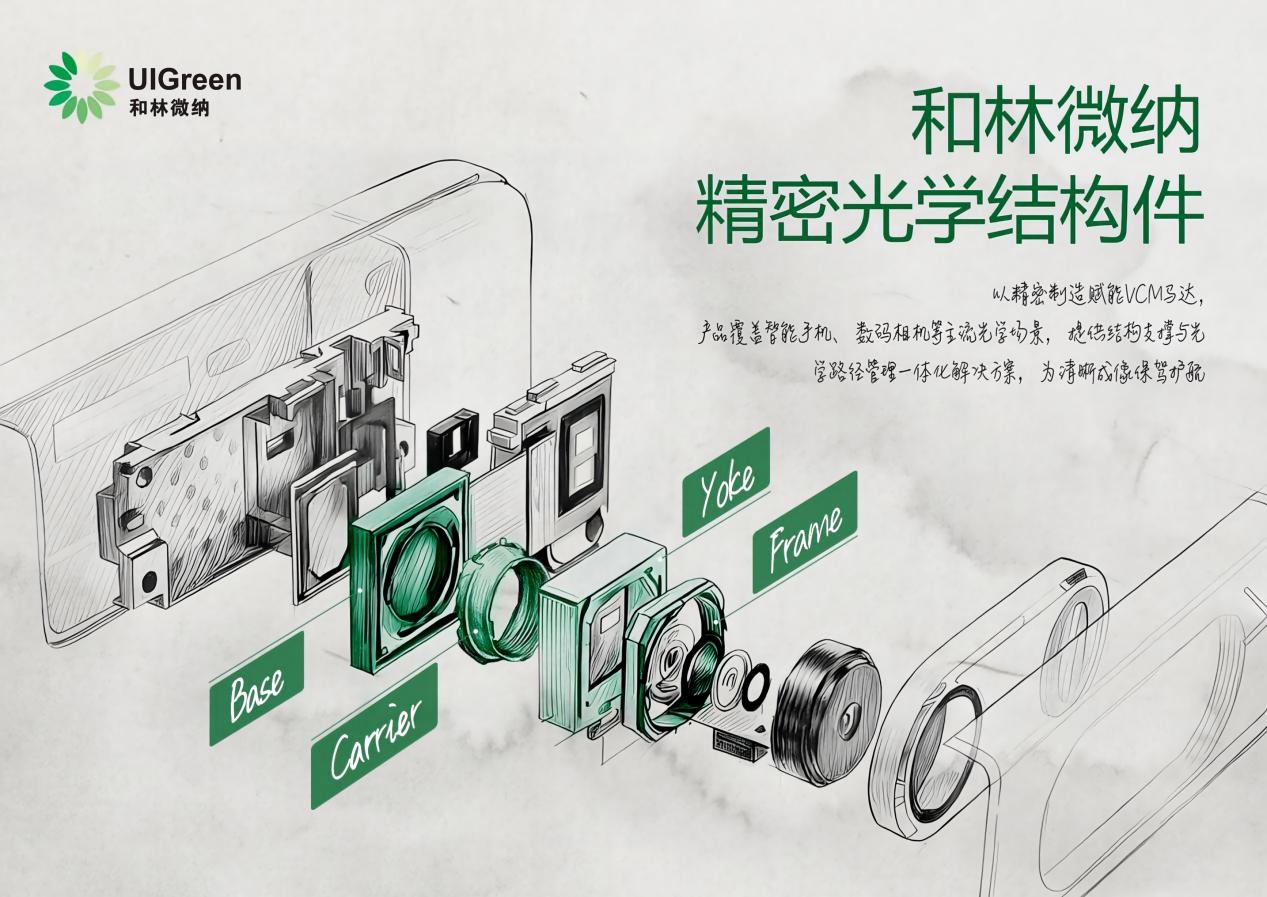
(Image caption: Exploded view of precision optical structural components)
Tolerances for these precision metal and plastic components are measured in microns: The tolerance for LCP injection-molded parts can be controlled within ±0.015mm, and some lens components can achieve tolerances at the ±0.001mm level.
Optics is the core focus of CIOE. Our optical structural components at the booth attracted a large number of industry professionals. Our sales team carefully explained the craftsmanship and structure of lens barrels and brackets, addressing customers' questions about tolerance control and mass delivery. The applications of optics will only become more widespread—optical communication, optical modules, and optical imaging. As light becomes a vehicle for faster data transmission, modules are becoming denser and chips are getting faster. The precision manufacturing requirements behind this are rising micron by micron.
These chips are touched by probes before they leave the factory
Beyond components, there is a second layer of precision manufacturing: chip testing.
Audio chips in earphones, image sensors in smartphones, and automotive-grade chips in vehicles—all must be tested before leaving the factory. Between every chip and the test equipment, signal conduction relies on spring probes and test sockets. The quality of the probes directly determines the accuracy of the test.
On the other side of the booth, samples of our spring probes and test sockets were neatly displayed, also equipped with electron microscopes so visitors could examine the product details.
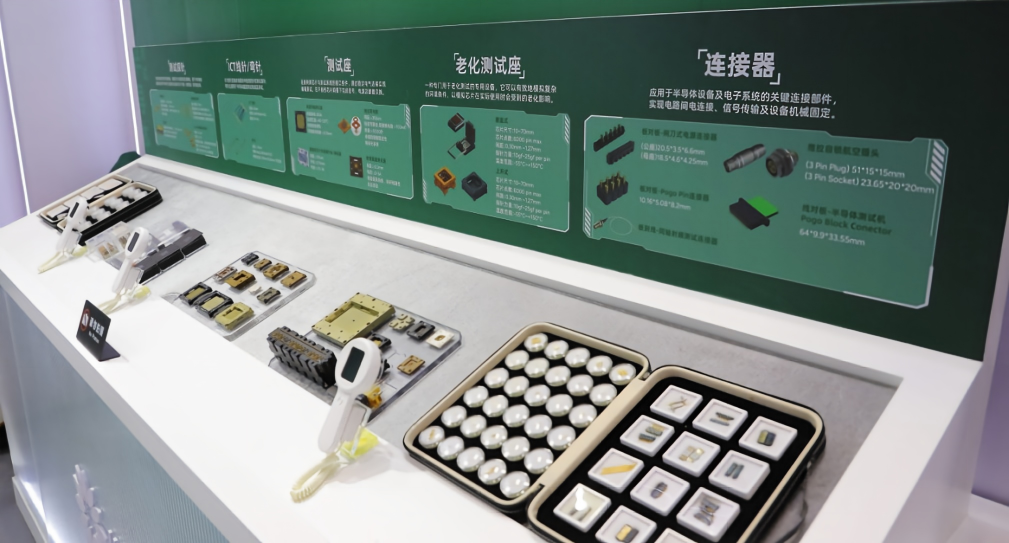
(Image caption: UIGreen's semiconductor test products on display)
Visitors leaned in closely to examine the display cases and asked highly technical questions: What's the maximum high-frequency performance? How much current can it handle? How fine can the pitch be?
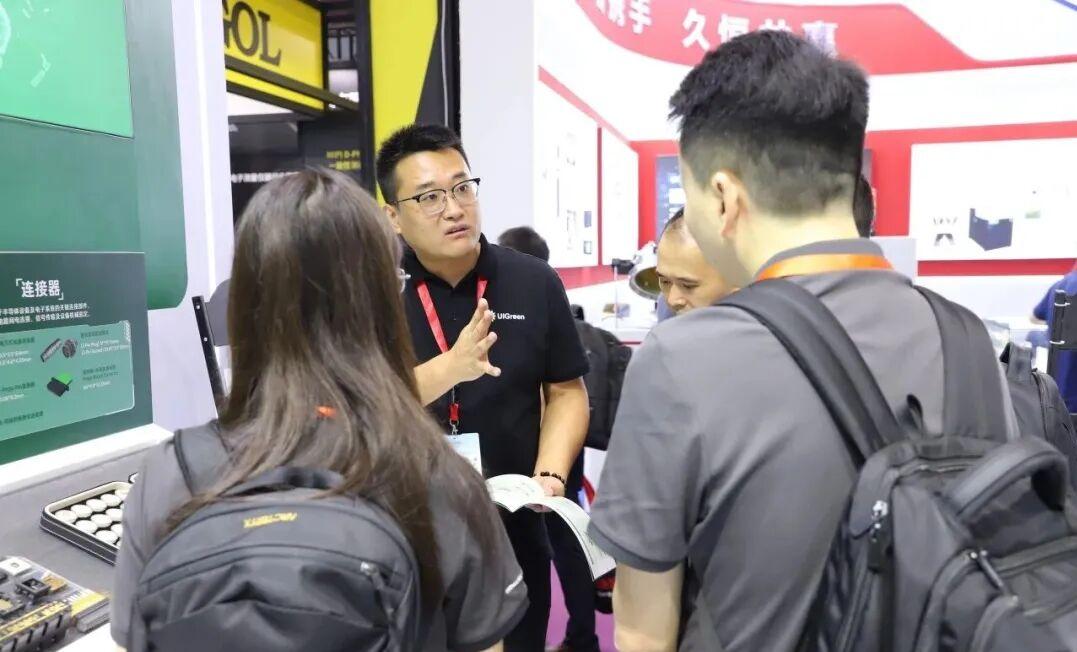
(Image caption: Visitors showing great interest in semiconductor test products)
UIGreen's spring probe platform covers three major testing demands: high-speed, high-current, and high-density. It offers RF bandwidth up to 55.49GHz, self-inductance as low as 0.49nH, a rated current of up to 5.0A, and contact resistance as low as <40mΩ.
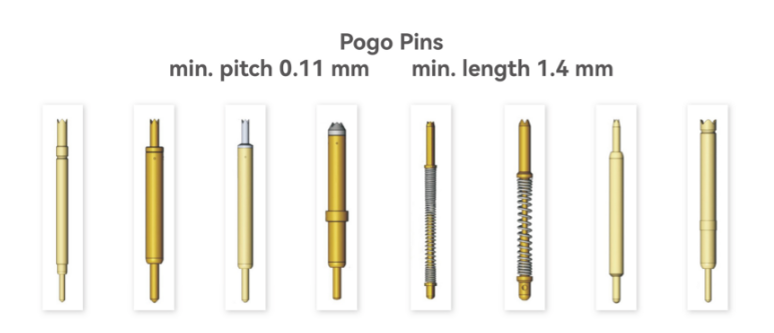
(Image caption: UIGreen's spring probes)
Every single probe undergoes 100% in-line inspection before leaving the factory, with data recorded for each one.
The failure of a single probe can lead to the misjudgment of an entire batch of chips. Though small in size, probes determine the big picture.
See You at CIOE
From September 9 to 11, UIGreen is exhibiting at the 27th CIOE (China International Optoelectronic Exposition) at the Shenzhen World Exhibition & Convention Center (Bao'an). Welcome to visit our booth and use the electron microscopes to see the precision manufacturing behind these applications and our daily lives.